- Delivering Pan India

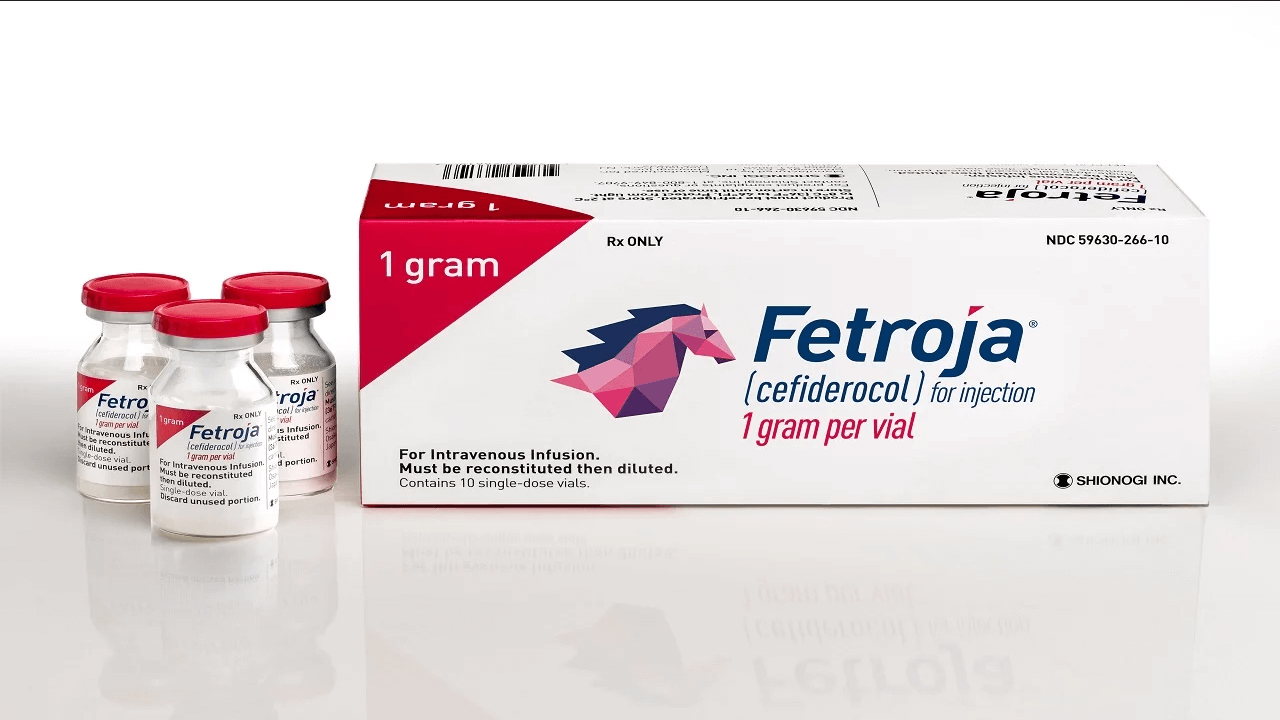
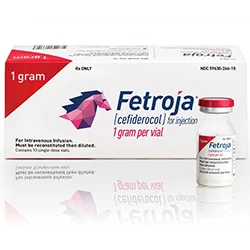
Cefiderocol 1g Injection — Siderophore Cephalosporin for Carbapenem-Resistant Gram-Negative Infections
Supplied only against a valid prescription from a registered medical practitioner.
Sourced from authorised channels
Temperature-controlled packing
Hospitals, clinics, pharmacies
Delhi drug licence holder
Fetroja® (Cefiderocol) — The World’s First Siderophore Cephalosporin for Drug-Resistant Gram-Negative Infections
The First Antibiotic to Use Iron Transport to Penetrate Resistant Bacteria — A Critical Last-Resort Option for Indian ICUs in 2026
Fetroja® (Cefiderocol) is a novel siderophore cephalosporin antibiotic — the world’s first antibiotic to use bacterial iron transport systems to penetrate resistant gram-negative bacteria. Indicated for serious gram-negative infections caused by carbapenem-resistant organisms (CROs) including carbapenem-resistant Enterobacteriaceae (CRE), carbapenem-resistant Pseudomonas aeruginosa (CRPA), carbapenem-resistant Acinetobacter baumannii (CRAB), and Stenotrophomonas maltophilia — Fetroja is increasingly critical in Indian ICUs where carbapenem resistance rates are among the highest in the world.
A.K. Pharma is a trusted medicine distributor and pharmaceutical distributor in Delhi supplying genuine Fetroja (Cefiderocol) to hospitals, ICUs, infectious disease units, and pharmacies across India. Manufactured by Shionogi & Co., Ltd., Fetroja represents a critical addition to the antibiotic arsenal against multidrug-resistant gram-negative infections that are increasingly common in Indian hospitals.
What is Fetroja (Cefiderocol)?
Fetroja contains Cefiderocol — a novel catechol-substituted siderophore cephalosporin with a unique dual mechanism of entry and activity that distinguishes it from all other approved antibiotics.
The Siderophore Mechanism — Iron as a Trojan Horse:
Bacteria require iron for survival and have evolved sophisticated iron transport systems — called siderophores — to capture iron from the environment. Cefiderocol mimics bacterial siderophores by chelating ferric iron (Fe³⁺) using its catechol moiety. The iron-Cefiderocol complex is then actively transported across the bacterial outer membrane through the bacterium’s own TonB-dependent iron uptake transporters — bypassing the outer membrane porin deficiencies that defeat conventional carbapenems.
This active transport mechanism allows Cefiderocol to:
Once in the periplasm, Cefiderocol binds penicillin-binding proteins (PBPs) — primarily PBP3 — inhibiting cell wall synthesis and causing bacterial death through the same fundamental mechanism as other beta-lactams, but delivered with unprecedented precision to the bacterial target.
Full prescribing information is available at the FDA label for Cefiderocol (Fetroja).
Clinical Studies and Evidence
CREDIBLE-CR Trial (Cefiderocol vs Best Available Therapy in Carbapenem-Resistant Infections) Published in The Lancet Infectious Diseases (2021), the CREDIBLE-CR trial compared Cefiderocol against best available therapy (BAT) in patients with carbapenem-resistant gram-negative infections. Clinical cure rates were comparable overall between Cefiderocol and BAT. Importantly, Cefiderocol demonstrated activity against organisms — including NDM-1-producing isolates — for which BAT had limited effective options. The trial results have been interpreted in the context of the specific patient population enrolled, which included a high proportion of critically ill patients with Acinetobacter baumannii infections. Cefiderocol remains the only beta-lactam with consistent in vitro activity against NDM-1-producing organisms — the dominant carbapenemase mechanism in India.
APEKS-NP Trial (Cefiderocol for Nosocomial Pneumonia) Published in The Lancet Infectious Diseases (2021), the APEKS-NP trial demonstrated Cefiderocol was non-inferior to high-dose extended-infusion Meropenem for hospital-acquired and ventilator-associated bacterial pneumonia caused by gram-negative bacteria — with all-cause 28-day mortality of 12.4% vs 11.6%, establishing Cefiderocol as a valid treatment option for gram-negative nosocomial pneumonia including VAP.
APEKS-cUTI Trial (Cefiderocol for Complicated UTI) Published in The Lancet Infectious Diseases (2019), the APEKS-cUTI trial demonstrated Cefiderocol was superior to Imipenem-Cilastatin for microbiological eradication in complicated urinary tract infections — with a composite microbiological eradication and clinical cure rate of 72.6% vs 54.6%.
Available Strengths
| Presentation | Strength | Standard Dose |
|---|---|---|
| Fetroja Powder for IV Infusion | 1g per vial | 2g IV every 8 hours as 3-hour extended infusion |
Indications — What Fetroja is Used For
Fetroja should be reserved for infections caused by confirmed carbapenem-resistant organisms where other treatment options are limited or unavailable. Susceptibility testing using Cefiderocol-specific disks and iron-depleted media is essential before use — standard cephalosporin disks cannot be used for Cefiderocol susceptibility testing.
For detailed indication information refer to MedlinePlus Cefiderocol.
Key Benefits of Fetroja
Unique Siderophore Mechanism — The Trojan Horse Antibiotic Fetroja uses bacterial iron transport systems to actively penetrate resistant gram-negative bacteria — bypassing the outer membrane permeability barriers that defeat conventional carbapenems and most other beta-lactams. No other approved antibiotic uses this mechanism.
Activity Against NDM-1-Producing Organisms — Critical for India India carries one of the highest global burdens of NDM-1-producing carbapenem-resistant organisms — particularly Klebsiella pneumoniae and Acinetobacter baumannii. Zavicefta (Ceftazidime-Avibactam) does not inhibit metallo-beta-lactamases including NDM-1. Fetroja retains in vitro activity against NDM-1-producing isolates — making it the only beta-lactam option in the Indian treatment ladder for confirmed NDM-1-producing CRE infections.
Stable Against Virtually All Beta-Lactamases Cefiderocol is stable against hydrolysis by all known beta-lactamases including serine carbapenemases (KPC, OXA-48) and metallo-beta-lactamases (NDM-1, VIM, IMP) — providing comprehensive coverage across resistance mechanisms.
Critical Last-Resort Option for XDR and PDR Infections For extensively drug-resistant (XDR) and pan-drug-resistant (PDR) gram-negative infections where no other active agent is available on susceptibility testing — Fetroja may represent the only remaining treatment option.
Lower Nephrotoxicity vs Colistin Fetroja’s nephrotoxicity profile is significantly better than Colistin — the traditional last-resort agent for carbapenem-resistant infections in Indian ICUs. For patients with pre-existing renal impairment or in settings where renal function monitoring is critical, this is a meaningful clinical advantage.
How Fetroja Works — Step by Step
Step 1 — Iron Chelation: Cefiderocol chelates ferric iron (Fe³⁺) in the extracellular environment using its catechol siderophore moiety — forming a stable, high-affinity iron-Cefiderocol complex that mimics bacterial siderophores.
Step 2 — Active Outer Membrane Transport (Trojan Horse): The iron-Cefiderocol complex is recognised by TonB-dependent outer membrane iron transporters and actively transported across the outer membrane — bypassing the OprD porin loss and OmpK35/36 downregulation that confer carbapenem resistance.
Step 3 — Periplasmic Accumulation: High concentrations of Cefiderocol accumulate in the bacterial periplasm — the site of cell wall synthesis — concentrations far exceeding what passive diffusion through downregulated porins would achieve.
Step 4 — PBP3 Inhibition and Cell Death: Cefiderocol binds penicillin-binding proteins — primarily PBP3 — inhibiting peptidoglycan cross-linking, disrupting cell wall integrity, and causing bacterial lysis.
For clinical pharmacology overview refer to IDSA AMR Guidance.
Fetroja vs Other Last-Resort Antibiotics
| Feature | Fetroja (Cefiderocol) | Colistin | Zavicefta (Ceftazidime-Avibactam) | Meropenem-Vaborbactam |
|---|---|---|---|---|
| CRE (KPC) | ✅ | ✅ | ✅ | ✅ |
| CRE (NDM-1/MBL) | ✅ | ✅ | ❌ | ❌ |
| CRPA | ✅ | ✅ | ✅ | ❌ |
| CRAB | ✅ | ✅ | ❌ | ❌ |
| Stenotrophomonas | ✅ | ❌ | ✅ | ❌ |
| Nephrotoxicity | Low | High | Low | Low |
| Available at A.K. Pharma | ✅ Request Quote | — | ✅ Request Quote | — |
Dosage and Administration
| Renal Function | Dose | Frequency | Infusion Duration |
|---|---|---|---|
| CrCl ≥60 mL/min | 2g | Every 8 hours | 3 hours |
| CrCl >120 mL/min (augmented renal clearance) | 2g | Every 6 hours | 3 hours |
| CrCl 30–59 mL/min | 1.5g | Every 8 hours | 3 hours |
| CrCl 15–29 mL/min | 1g | Every 8 hours | 3 hours |
| CrCl <15 mL/min or ESRD on dialysis | 0.75g | Every 12 hours | 3 hours |
Administration:
Augmented Renal Clearance: Critically ill patients with hyperdynamic physiology may have CrCl >120 mL/min — standard dosing will result in subtherapeutic levels. Measure CrCl at treatment initiation and consider dose escalation to 2g every 6 hours if augmented renal clearance is confirmed.
Full dosing guidance available at Drugs.com Cefiderocol Dosage.
Who Should Use Fetroja
Fetroja is prescribed for critically ill patients with confirmed or suspected carbapenem-resistant gram-negative infections when:
Fetroja is prescribed by infectious disease physicians, clinical microbiologists, and intensivists. A.K. Pharma supplies Fetroja to hospital ICUs, infectious disease units, and pharmacies across Delhi and India as a licensed medicine distributor and pharmaceutical distributor in Delhi.
Possible Side Effects
Common side effects include diarrhoea (7.5%), infusion site reactions (5%), nausea (4%), elevated liver enzymes (4%), and rash (4%).
Serious side effects include:
Clostridioides difficile-Associated Diarrhoea (CDAD): As with all broad-spectrum antibiotics, C. difficile-associated diarrhoea has been reported with Cefiderocol. Monitor for diarrhoea developing during or after treatment; consider C. difficile testing in patients with significant diarrhoea.
Seizures and CNS Effects: Beta-lactam class effect — seizures and encephalopathy reported. Monitor for neurological adverse events, particularly in patients with renal impairment, CNS pathology, or receiving concomitant CNS-active agents.
Hypersensitivity: Serious hypersensitivity reactions including anaphylaxis reported with beta-lactam antibiotics. Exercise caution in patients with penicillin or cephalosporin allergy history.
Full safety information available at FDA Fetroja Safety Information.
Precautions
Storage and Handling
As a responsible medicine distributor and pharmaceutical distributor in Delhi, A.K. Pharma stores all medicines including Fetroja under manufacturer-recommended conditions, ensuring product integrity for every supply.
Manufacturer Information
Fetroja (Cefiderocol) is manufactured by Shionogi & Co., Ltd. — a Japanese pharmaceutical company. Cefiderocol received FDA approval in November 2019 for complicated UTI and in September 2020 for hospital-acquired and ventilator-associated bacterial pneumonia. A.K. Pharma supplies only genuine Fetroja sourced from authorized Shionogi distributors.
Related Anti-Infective Medicines Available at A.K. Pharma
Frequently Asked Questions
Q. What is Fetroja used for? Fetroja (Cefiderocol injection) is used to treat serious gram-negative infections caused by carbapenem-resistant organisms — including carbapenem-resistant Enterobacteriaceae (CRE), carbapenem-resistant Acinetobacter baumannii (CRAB), carbapenem-resistant Pseudomonas aeruginosa (CRPA), and Stenotrophomonas maltophilia — in patients with limited treatment options. More information at MedlinePlus.
Q. What is the generic name of Fetroja? Cefiderocol. It is a siderophore cephalosporin antibiotic — the world’s first antibiotic of this class approved for clinical use. Manufactured by Shionogi & Co., Ltd.
Q. How is Fetroja different from other antibiotics? Fetroja uses a unique siderophore mechanism — disguising itself as an iron-chelating molecule to be actively transported inside gram-negative bacteria through their own iron uptake systems. This bypasses the outer membrane porin loss that confers resistance to conventional carbapenems, and the drug is stable against all known beta-lactamases including metallo-beta-lactamases (NDM-1, VIM, IMP) that render Ceftazidime-Avibactam (Zavicefta) inactive.
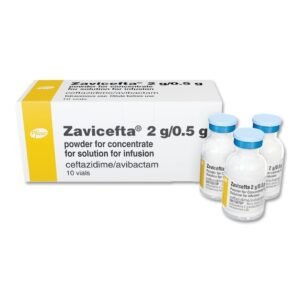
Q. What is the difference between Fetroja (Cefiderocol) and Zavicefta (Ceftazidime-Avibactam)? Zavicefta (Ceftazidime-Avibactam) is highly effective against KPC and OXA-48 carbapenemase-producing organisms but has no activity against NDM-1, VIM, and IMP metallo-beta-lactamase-producing organisms — which are the dominant carbapenemase mechanism in India. Fetroja (Cefiderocol) retains in vitro activity against NDM-1-producing organisms — making it the appropriate choice when NDM-1 is confirmed or suspected. Both are available from A.K. Pharma — a licensed medicine distributor in Delhi.
Q. Why is susceptibility testing mandatory for Fetroja? Cefiderocol susceptibility cannot be accurately tested using standard cephalosporin disks — iron in standard testing media interferes with the siderophore mechanism and gives falsely low MICs. Dedicated Cefiderocol disks with iron-depleted (CAMHB-ID) media per CLSI or EUCAST methodology are required for accurate susceptibility testing.
Q. Is Fetroja available in India? Yes — Fetroja (Cefiderocol 1g injection) is available in India through licensed pharmaceutical distributors. Contact A.K. Pharma — medicine distributor and pharmaceutical distributor in Delhi — at 011 4172 6999 or WhatsApp +91 9810034827 for availability and pricing.
Q. Does A.K. Pharma supply Fetroja in bulk to hospitals? Yes — A.K. Pharma supplies Fetroja in bulk to ICUs, hospitals, and pharmacies across Delhi and India. Contact us for bulk pricing and availability.
Why Order Fetroja from A.K. Pharma?
Contact A.K. Pharma for Fetroja Supply 📍 E-2/257A, 2nd Floor, Shastri Nagar, New Delhi 110052 📞 011 4172 6999 📱 WhatsApp: +91 9810034827 🌐 akpharma.in