- Delivering Pan India

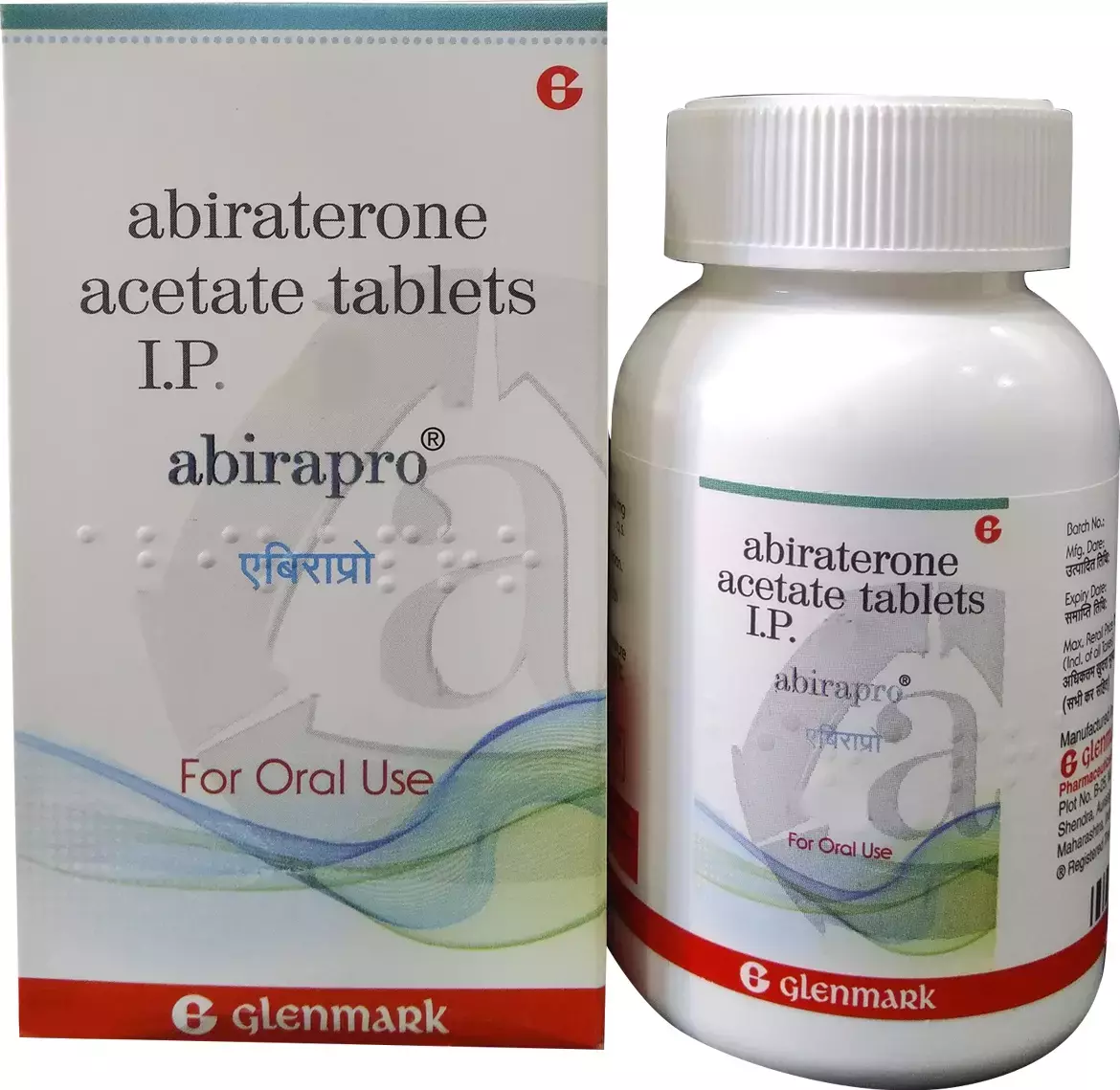
Abiraterone Acetate 250mg, 500mg Tablets — CYP17A1 Inhibitor for Metastatic Castration-Resistant and High-Risk Metastatic Hormone-Sensitive Prostate Cancer
Supplied only against a valid prescription from a registered medical practitioner.
Sourced from authorised channels
Temperature-controlled packing
Hospitals, clinics, pharmacies
Delhi drug licence holder
Abirapro® (Abiraterone Acetate) — CYP17 Inhibitor Transforming Prostate Cancer Survival
The First Oral Therapy to Improve Survival in Metastatic Castration-Resistant Prostate Cancer — Now Standard of Care in Multiple Settings
Abirapro® (Abiraterone Acetate) is a selective, irreversible inhibitor of CYP17A1 — a bifunctional enzyme (17α-hydroxylase and C17,20-lyase) essential for androgen biosynthesis in the testes, adrenal glands, and within prostate tumour tissue itself. Standard androgen deprivation therapy (ADT) with GnRH agonists or antagonists suppresses testicular androgen production — but adrenal and intratumoral androgen synthesis continues, driving castration-resistant prostate cancer (CRPC) growth. By inhibiting CYP17A1, Abirapro suppresses all three sources of androgen production — testicular, adrenal, and intratumoral — providing more complete androgen deprivation than ADT alone.
This deeper androgen suppression translates into meaningful survival benefit across multiple prostate cancer settings — from high-risk metastatic hormone-sensitive prostate cancer (mHSPC) to post-chemotherapy metastatic castration-resistant prostate cancer (mCRPC) — making Abiraterone one of the most important advances in prostate cancer treatment in the past two decades.
A.K. Pharma is a trusted medicine distributor in Delhi supplying genuine Abirapro (Abiraterone Acetate) to hospitals, oncology centres, urology clinics, and pharmacies across India. Abiraterone Acetate is available as a branded generic in India — delivering the same proven efficacy as the originator Zytiga at more accessible pricing for Indian patients and healthcare providers.
What is Abirapro (Abiraterone Acetate)?
Abirapro contains Abiraterone Acetate — a prodrug that is rapidly converted in vivo to Abiraterone, the active moiety. Abiraterone is a selective, irreversible inhibitor of CYP17A1 — a cytochrome P450 enzyme that catalyses two sequential reactions in androgen biosynthesis:
17α-hydroxylase reaction: Pregnenolone → 17α-hydroxypregnenolone Progesterone → 17α-hydroxyprogesterone
C17,20-lyase reaction: 17α-hydroxypregnenolone → DHEA (dehydroepiandrosterone) 17α-hydroxyprogesterone → Androstenedione
Both reactions are essential for testosterone and dihydrotestosterone (DHT) synthesis. By irreversibly blocking CYP17A1, Abirapro:
Full prescribing information is available at the FDA label for Abiraterone Acetate.
Clinical Studies and Evidence
COU-AA-301 Trial (Abiraterone in Post-Docetaxel mCRPC) Published in the New England Journal of Medicine (2011), the pivotal COU-AA-301 trial was a Phase 3 randomised controlled trial of 1,195 patients with mCRPC who had progressed after Docetaxel chemotherapy. Key results at final analysis:
COU-AA-302 Trial (Abiraterone in Chemotherapy-Naive mCRPC) Published in the New England Journal of Medicine (2013), COU-AA-302 was a Phase 3 trial of 1,088 asymptomatic or mildly symptomatic chemotherapy-naive mCRPC patients. Key results at updated analysis:
LATITUDE Trial (Abiraterone in High-Risk mHSPC) Published in the New England Journal of Medicine (2017), the landmark LATITUDE trial was a Phase 3 trial of 1,199 patients with newly diagnosed high-risk metastatic hormone-sensitive prostate cancer — defined by at least 2 of 3 high-risk factors: Gleason score ≥8, ≥3 bone metastases, presence of visceral metastases. Key results at updated analysis:
STAMPEDE Trial (Abiraterone in mHSPC and High-Risk Localised) Published in the New England Journal of Medicine (2017), the STAMPEDE trial — a large multi-arm platform trial — demonstrated Abiraterone + Prednisolone added to standard of care (ADT ± radiotherapy) significantly improved failure-free survival and overall survival across a broad population including metastatic and high-risk localised prostate cancer — confirming and expanding LATITUDE findings.
Long-Term LATITUDE and COU-AA Data 5-year follow-up from LATITUDE confirmed maintained OS benefit — with 5-year OS rate of 49.3% vs 35.2% for Abiraterone vs ADT alone. Long-term COU-AA data similarly confirmed durable OS benefit — supporting indefinite continuation of Abiraterone until disease progression.
Available Strengths
Abirapro is available in the following strengths:
| Presentation | Dose | Tablets Per Day |
|---|---|---|
| Abirapro 250mg Tablets | 250mg per tablet | 4 tablets daily (1000mg total) |
| Abirapro 500mg Tablets | 500mg per tablet | 2 tablets daily (1000mg total) |
Standard dose: 1000mg orally once daily — taken as either four 250mg tablets or two 500mg tablets.
Critical — Must be taken on an empty stomach: Abiraterone absorption is dramatically increased by food — taking with a meal can increase plasma exposure by 5-10 fold, causing toxic plasma levels and severe side effects. Abiraterone must be taken on an empty stomach — no food for at least 2 hours before and 1 hour after each dose. This is the most important patient counselling point for Abiraterone.
Always with Prednisone: Abiraterone must always be taken with low-dose Prednisone 5mg twice daily — to prevent mineralocorticoid excess syndrome caused by compensatory ACTH rise and accumulation of mineralocorticoid precursors (deoxycorticosterone, corticosterone) proximal to the CYP17A1 block.
Indications — What Abirapro is Used For
Metastatic Castration-Resistant Prostate Cancer (mCRPC):
Metastatic Hormone-Sensitive Prostate Cancer (mHSPC):
For detailed indication information refer to MedlinePlus Abiraterone.
Key Benefits of Abirapro
Superior Androgen Suppression Beyond Standard ADT Standard ADT suppresses only testicular androgen production — adrenal and intratumoral androgen synthesis continues and drives CRPC emergence and progression. Abirapro blocks all three sources of androgen production — achieving near-complete androgen suppression that standard ADT alone cannot provide.
Proven OS Benefit in Multiple Settings Abiraterone demonstrates overall survival benefit in three major clinical settings — post-chemotherapy mCRPC (COU-AA-301), chemotherapy-naive mCRPC (COU-AA-302), and high-risk mHSPC (LATITUDE) — making it one of the most broadly proven prostate cancer treatments and an essential medicine across the prostate cancer treatment continuum.
Landmark 16.8-Month OS Improvement in mHSPC The LATITUDE trial demonstrated a 16.8-month median OS improvement with Abiraterone in high-risk mHSPC — one of the largest OS improvements ever demonstrated in a prostate cancer clinical trial — transforming the approach to newly diagnosed high-risk metastatic disease.
Oral Once-Daily Treatment Once-daily oral tablet regimen maintains patient quality of life and independence — avoiding the need for regular clinic visits for parenteral therapy while delivering profound androgen suppression.
Delays Chemotherapy In chemotherapy-naive mCRPC, Abiraterone significantly delays the time to chemotherapy initiation — preserving quality of life and deferring the toxicities of cytotoxic chemotherapy.
Well Characterised and Manageable Safety Profile Extensive trial data across over 3,000 patients in pivotal trials provides comprehensive safety characterisation — with mineralocorticoid excess (managed by Prednisone), liver enzyme elevation (monitored monthly), and hypertension the primary concerns, all of which are manageable with appropriate monitoring.
How Abirapro Works
The Problem — Incomplete Androgen Deprivation With Standard ADT:
Standard ADT (GnRH agonist or antagonist, surgical castration) suppresses testicular androgen production — reducing plasma testosterone to castration levels. However:
Abirapro’s Solution — CYP17A1 Inhibition:
Compensatory Mineralocorticoid Excess: Blocking CYP17A1 causes accumulation of upstream mineralocorticoid precursors (deoxycorticosterone) → fluid retention, hypertension, hypokalaemia. Low-dose Prednisone (5mg twice daily) suppresses ACTH and prevents this mineralocorticoid excess — making Prednisone co-administration mandatory.
For a detailed mechanism overview refer to EAU Prostate Cancer Guidelines and AUA Advanced Prostate Cancer Guidelines.
Abirapro vs Glenza (Enzalutamide) — Comparison in mCRPC
| Feature | Abirapro (Abiraterone) | Glenza (Enzalutamide) |
|---|---|---|
| Mechanism | CYP17A1 inhibitor — blocks androgen synthesis | AR signalling inhibitor — blocks AR binding, translocation, DNA binding |
| Target | Androgen synthesis pathway | Androgen receptor |
| Prednisone required | ✅ Yes — 5mg twice daily | ❌ Not required |
| Food restriction | ✅ Empty stomach required | ❌ With or without food |
| Seizure risk | Low | Low (history of seizures — caution) |
| mCRPC indication | ✅ Pre and post-chemotherapy | ✅ Pre and post-chemotherapy |
| mHSPC indication | ✅ Yes (LATITUDE trial) | ✅ Yes (ARCHES/ENZAMET) |
| Combined use | Not recommended (overlapping toxicity) | Not recommended |
| Available at A.K. Pharma | Request Quote | Request Quote |
Dosage and Administration
Standard Dose:
Critical Administration Rules:
Duration:
Monitoring Schedule:
Full dosing and monitoring guidelines available at Drugs.com Abiraterone Dosage.
Combination Therapy — Abirapro in Current Treatment Algorithms
High-Risk mHSPC (Newly Diagnosed):
mCRPC (Pre-Chemotherapy):
mCRPC (Post-Docetaxel):
Sequencing — After Abiraterone: When disease progresses on Abiraterone — Glenza (Enzalutamide) has reduced activity due to cross-resistance at the AR level. Pivikto (Lutetium-177 PSMA) is the preferred subsequent therapy in PSMA-positive mCRPC patients who have received both AR pathway inhibitor and chemotherapy.
Who Should Use Abirapro
Abirapro is prescribed for:
Abirapro is prescribed by urologists, medical oncologists, and radiation oncologists. A.K. Pharma supplies Abirapro to hospitals, oncology centres, urology clinics, and pharmacies across Delhi and India.
Possible Side Effects
Common side effects include peripheral oedema (fluid retention — 26-30%), hypertension (22-26%), hypokalaemia (17-20%), fatigue (18-22%), hot flushes (19-22%), diarrhoea (17-22%), and urinary tract infection.
Serious side effects include:
Full side effect information available at FDA Abiraterone Safety Information.
Precautions
Storage and Handling
As a responsible medicine distributor in Delhi, A.K. Pharma stores all oncology medicines including Abirapro under manufacturer-recommended conditions ensuring product integrity for every supply to oncology centres and urology clinics.
Manufacturer Information
Abirapro (Abiraterone Acetate) is a branded generic containing the same active ingredient as the originator Zytiga — originally developed by Janssen Oncology (Johnson & Johnson). Abiraterone Acetate received FDA approval in April 2011 for post-chemotherapy mCRPC, with subsequent approvals for chemotherapy-naive mCRPC (2012) and mHSPC (2018). A.K. Pharma supplies only genuine Abirapro sourced from authorised distributors.
Related Prostate Cancer Medicines Available at A.K. Pharma
Frequently Asked Questions
Q. What is Abirapro used for? Abirapro (Abiraterone Acetate) is used to treat metastatic castration-resistant prostate cancer (mCRPC) — both pre and post-chemotherapy — and high-risk metastatic hormone-sensitive prostate cancer (mHSPC) in combination with androgen deprivation therapy. More information available at MedlinePlus.
Q. What is the generic name of Abirapro? The generic name of Abirapro is Abiraterone Acetate. It is a selective CYP17A1 inhibitor that blocks androgen synthesis in the adrenal glands, testes, and prostate tumour tissue.
Q. Why must Abirapro be taken on an empty stomach? Food — particularly high-fat meals — dramatically increases Abiraterone absorption, with plasma exposure increasing 5-10 fold compared to fasted state. Taking Abiraterone with food causes toxic drug levels — significantly increasing side effects including hepatotoxicity and cardiovascular effects. Abiraterone must be taken at least 2 hours after and 1 hour before food — this is mandatory.
Q. Why is Prednisone required with Abirapro? Blocking CYP17A1 causes accumulation of mineralocorticoid precursors (deoxycorticosterone) — leading to hypertension, hypokalaemia, and fluid retention. Low-dose Prednisone 5mg twice daily suppresses ACTH, preventing this mineralocorticoid excess. Prednisone co-administration is mandatory — Abirapro should never be used without it.
Q. How is Abirapro different from Glenza (Enzalutamide)? Abirapro blocks androgen synthesis through CYP17A1 inhibition. Glenza (Enzalutamide) blocks the androgen receptor through AR signalling inhibition. Both are effective in mCRPC but work through different mechanisms — they are not used together due to overlapping toxicity and lack of additive benefit. Abirapro requires Prednisone and empty stomach dosing; Glenza does not.
Q. Can Abirapro be used in hormone-sensitive prostate cancer? Yes — the LATITUDE and STAMPEDE trials demonstrated Abiraterone + Prednisone + ADT significantly improves overall survival in high-risk metastatic hormone-sensitive prostate cancer — making it standard of care in this setting.
Q. What monitoring is required during Abirapro treatment? Liver function tests monthly, blood pressure at every visit, serum potassium monthly, PSA every 3 months, and testosterone to confirm castration. See the dosage section above for full monitoring schedule.
Q. Is Abirapro available in India? Abirapro can be supplied to hospitals, oncology centres, and pharmacies across India through licensed pharmaceutical distributors. Contact A.K. Pharma — medicine distributor in Delhi — for availability and pricing.
Q. What is the price of Abirapro in India? Abirapro price in India varies by strength and pack size. Contact A.K. Pharma at 011 4172 6999 or WhatsApp +91 9810034827 for current pricing and bulk supply rates.
Q. How to order Abirapro from A.K. Pharma? You can request a quote directly from this page, call us at 011 4172 6999, or WhatsApp us at +91 9810034827 with your requirements and we will respond promptly.
Q. Does A.K. Pharma supply Abirapro in bulk? Yes. A.K. Pharma supplies Abirapro in bulk to oncology centres, urology clinics, hospitals, and pharmacies across Delhi and India. Contact us for bulk pricing and availability.
Why Order Abirapro from A.K. Pharma?
Contact A.K. Pharma for Abirapro Supply 📍 E-2/257A, 2nd Floor, Shastri Nagar, New Delhi 110052 📞 011 4172 6999 📱 WhatsApp: +91 9810034827 🌐 akpharma.in