Tofacitinib 5mg, 10mg Film-Coated Tablets — JAK1/JAK3 Inhibitor for Rheumatoid Arthritis, Psoriatic Arthritis, Ankylosing Spondylitis, Ulcerative Colitis and Juvenile Idiopathic Arthritis
Supplied only against a valid prescription from a registered medical practitioner.
Sourced from authorised channels
Temperature-controlled packing
Hospitals, clinics, pharmacies
Delhi drug licence holder
Betrecep® (Tofacitinib) — First-in-Class JAK Inhibitor for Inflammatory Diseases
The World’s First Approved JAK Inhibitor — Oral Targeted Therapy Transforming Rheumatology and Gastroenterology
Betrecep® (Tofacitinib) is a potent, selective Janus kinase (JAK) inhibitor — the world’s first approved JAK inhibitor for any clinical indication — that predominantly inhibits JAK1 and JAK3, with functional selectivity over JAK2. By blocking JAK1 and JAK3 signalling, Tofacitinib interrupts the intracellular signalling cascade downstream of multiple pro-inflammatory cytokine receptors — simultaneously suppressing signalling from IL-2, IL-4, IL-6, IL-7, IL-9, IL-15, IL-21, IFN-γ, and other cytokines that drive the inflammatory processes underlying rheumatoid arthritis, psoriatic arthritis, ankylosing spondylitis, and ulcerative colitis.
Unlike conventional biologics (anti-TNF, anti-IL-6, anti-IL-17A antibodies) which target individual extracellular cytokines by injection or infusion, Tofacitinib is an orally administered small molecule that acts intracellularly — blocking the JAK-STAT signalling pathway used by multiple cytokine receptors simultaneously. This oral delivery and broad intracellular mechanism of action provides unique clinical advantages — once or twice daily tablet dosing, rapid onset of action, and modulation of multiple inflammatory pathways with a single medicine.
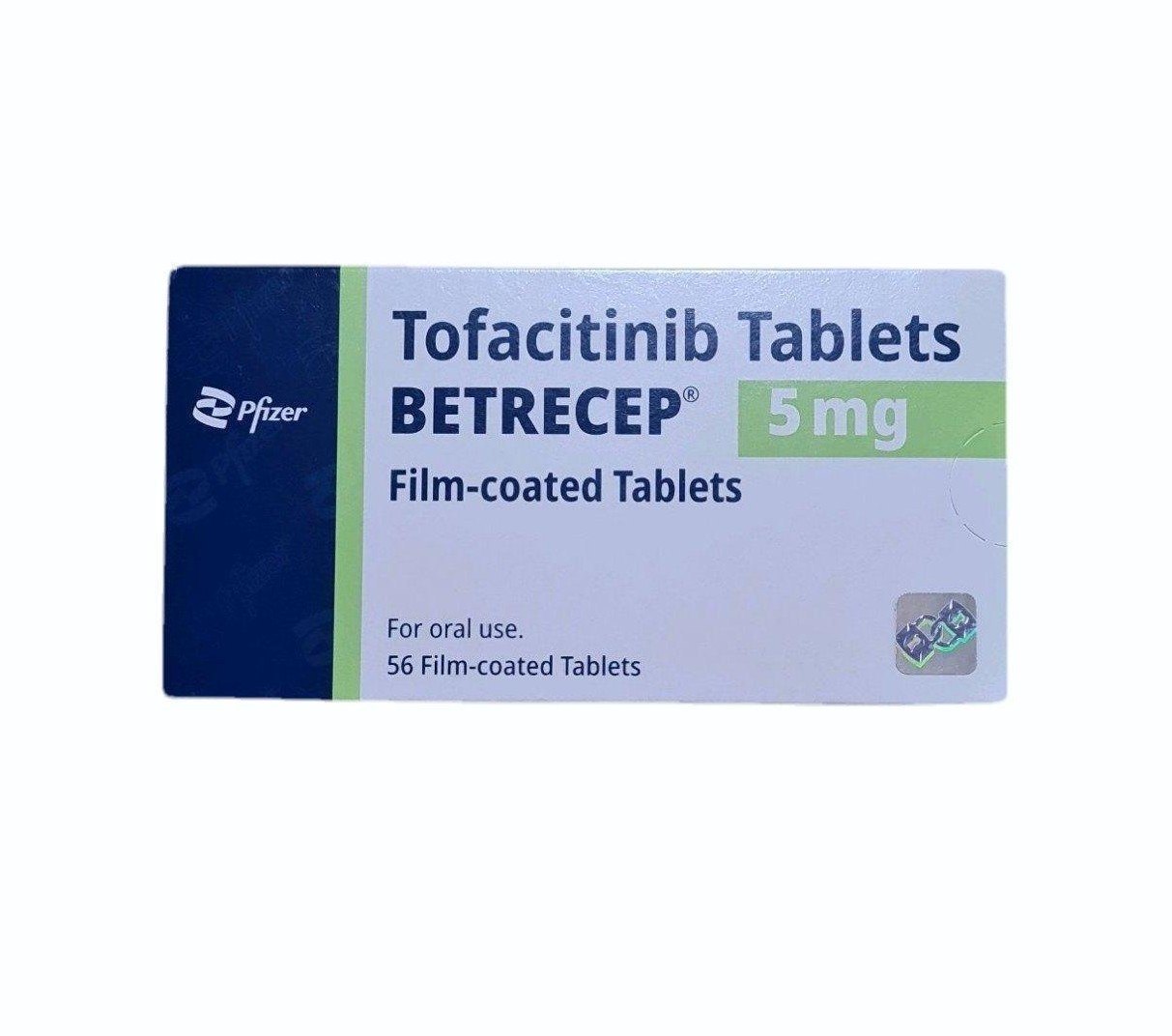
A.K. Pharma is a trusted medicine distributor in Delhi supplying genuine Betrecep (Tofacitinib) in both 5mg and 10mg tablet strengths to hospitals, rheumatology centres, gastroenterology units, and pharmacies across India. Manufactured by Pfizer India Ltd, Betrecep is the Indian brand of Tofacitinib — the same active ingredient as the internationally recognised Xeljanz — providing accessible pricing for Indian patients requiring JAK inhibitor therapy.
What is Betrecep (Tofacitinib)?
Betrecep contains Tofacitinib — a small molecule pyrrolopyrimidine compound that competitively and reversibly binds to the ATP-binding site of JAK1 and JAK3 kinase domains — inhibiting their catalytic activity and blocking downstream STAT phosphorylation and activation.
The JAK-STAT Pathway — Why It Matters in Inflammatory Disease:
The JAK-STAT (Janus Kinase — Signal Transducer and Activator of Transcription) pathway is a critical intracellular signalling cascade used by over 50 cytokines, growth factors, and hormones — including the majority of pro-inflammatory cytokines driving rheumatoid arthritis, psoriatic arthritis, ankylosing spondylitis, and ulcerative colitis.
Normal JAK-STAT Signalling:
JAK-STAT in Autoimmune/Inflammatory Disease: In RA, PsA, AS, and UC — dysregulated cytokine production drives continuous pathological JAK-STAT activation:
Tofacitinib’s Broad Cytokine Pathway Blockade: By inhibiting JAK1 and JAK3 — the two JAK kinases used by the common gamma chain (γc) receptor cytokines (IL-2, IL-4, IL-7, IL-9, IL-15, IL-21) and by IL-6 receptor (JAK1/JAK2) signalling — Tofacitinib simultaneously blocks multiple pro-inflammatory cytokine pathways with a single oral tablet. This broad pathway inhibition from one medicine is mechanistically distinct from biologics that each target only one cytokine or receptor.
Full prescribing information is available at the FDA label for Tofacitinib.
Clinical Studies and Evidence
ORAL Scan Trial (Tofacitinib in RA — Structural Protection) Published in Arthritis & Rheumatism (2012), the ORAL Scan trial demonstrated Tofacitinib 5mg and 10mg twice daily significantly inhibited radiographic progression (Sharp/van der Heijde score) in MTX-inadequate RA — establishing structural protection alongside symptomatic improvement.
ORAL Standard Trial (Tofacitinib vs Adalimumab in RA) Published in the New England Journal of Medicine (2012), the landmark ORAL Standard trial enrolled 717 MTX-inadequate RA patients — comparing Tofacitinib 5mg twice daily, Tofacitinib 10mg twice daily, Adalimumab 40mg Q2W, and placebo. Key results at month 6:
ORAL Solo Trial (Tofacitinib Monotherapy in RA) Published in Arthritis & Rheumatism (2012), the ORAL Solo trial demonstrated significant ACR20, ACR50, and ACR70 responses with Tofacitinib monotherapy vs placebo in MTX-inadequate or intolerant RA patients — establishing Tofacitinib as effective as monotherapy when MTX is not tolerated.
OPAL Broaden Trial (Tofacitinib in Psoriatic Arthritis After csDMARD Failure) Published in the Lancet (2017), the OPAL Broaden trial enrolled 422 patients with active PsA who had failed csDMARD therapy — comparing Tofacitinib 5mg, 10mg twice daily, Adalimumab, and placebo. Key results at month 3:
OPAL Beyond Trial (Tofacitinib in PsA After Anti-TNF Failure) Published in Annals of the Rheumatic Diseases (2017), OPAL Beyond demonstrated Tofacitinib significantly improved ACR20 vs placebo in anti-TNF-experienced PsA patients — establishing Tofacitinib as an effective oral option after anti-TNF failure in PsA.
OCTAVE Induction and Sustain Trials (Tofacitinib in Ulcerative Colitis) Published in the New England Journal of Medicine (2017), the OCTAVE trials were pivotal Phase 3 trials in 1,139 patients with moderately-to-severely active UC who had failed or were intolerant to conventional therapy. Key results:
Ankylosing Spondylitis — Phase 2/3 Data: Clinical trial data demonstrated Tofacitinib significantly improved ASAS20 and ASAS40 in patients with active AS — leading to approval for this indication in multiple countries including India.
Available Strengths
Betrecep is available in the following tablet strengths:
| Presentation | Dose | Use |
|---|---|---|
| Betrecep 5mg Film-Coated Tablets | 5mg | Standard dose for RA, PsA, AS; UC maintenance |
| Betrecep 10mg Film-Coated Tablets | 10mg | UC induction; some RA patients; higher dose option |
Both strengths are available from A.K. Pharma — providing complete dosing flexibility across all approved indications.
Indications — What Betrecep is Used For
Rheumatoid Arthritis:
Psoriatic Arthritis:
Ankylosing Spondylitis:
Ulcerative Colitis:
Polyarticular-Course Juvenile Idiopathic Arthritis (pcJIA):
For detailed indication information refer to MedlinePlus Tofacitinib.
Key Benefits of Betrecep
First-in-Class JAK Inhibitor — Pioneering Oral Targeted Therapy Tofacitinib was the world’s first JAK inhibitor approved for any indication — pioneering an entirely new class of targeted immunosuppressants. Before JAK inhibitors, oral targeted therapy for RA, PsA, and UC did not exist — patients requiring targeted therapy needed injections or infusions. Tofacitinib’s oral availability fundamentally changed the treatment landscape.
Broad Multi-Cytokine Pathway Inhibition From One Oral Tablet By inhibiting JAK1 and JAK3 — shared by receptors for IL-2, IL-4, IL-6, IL-7, IL-9, IL-15, IL-21, and IFN-γ — Tofacitinib simultaneously suppresses multiple key inflammatory pathways driving RA, PsA, AS, and UC. This breadth of pathway inhibition from a single oral tablet is mechanistically superior to single-cytokine biologic targeting for diseases driven by multiple overlapping inflammatory mediators.
Comparable Efficacy to Adalimumab With Oral Convenience The ORAL Standard trial demonstrates Tofacitinib 5mg twice daily is non-inferior to Adalimumab (the most prescribed anti-TNF biologic) for ACR20 in MTX-inadequate RA — with the major practical advantage of oral tablet administration vs subcutaneous injection every 2 weeks.
First Oral Therapy Approved for Ulcerative Colitis Tofacitinib was the first oral targeted therapy approved for UC — providing a critically important oral option for patients with moderate-severe UC who have failed conventional therapy (aminosalicylates, corticosteroids, azathioprine) and biologics (anti-TNF, anti-integrin). Before Tofacitinib, all approved targeted therapies for UC required injection or infusion.
Rapid Onset of Action JAK inhibitors achieve rapid therapeutic response — significant improvements in joint symptoms and inflammatory markers typically seen within 2-4 weeks. This rapid onset is faster than many conventional DMARDs and comparable to biologic therapies.
Effective in Both Biologic-Naive and Biologic-Experienced Patients Tofacitinib demonstrates efficacy in both biologic-naive patients and those who have failed prior anti-TNF or other biologic therapy — providing an important oral option at multiple stages of the treatment algorithm for RA, PsA, and UC.
Oral Administration — No Injection Required Twice-daily oral tablet administration eliminates the need for subcutaneous injections or intravenous infusions — significantly improving patient comfort, convenience, and independence from clinical visits for drug administration.
Both 5mg and 10mg Available From A.K. Pharma A.K. Pharma supplies both Betrecep 5mg and 10mg — enabling complete dose management across all indications including UC induction (10mg) and maintenance (5mg), and dose escalation options in RA.
How Betrecep Works — JAK-STAT Pathway Inhibition
Step 1 — JAK Kinase ATP Site Binding: Tofacitinib enters cells and binds competitively to the ATP-binding cleft of JAK1 and JAK3 kinase domains — preventing ATP from binding. Without ATP, JAK1 and JAK3 cannot perform phosphoryl transfer — the kinases are catalytically inactive.
Step 2 — Trans-phosphorylation Blockade: Normally, cytokine receptor binding leads to JAK-JAK trans-phosphorylation (activation loop phosphorylation) — amplifying JAK kinase activity. Tofacitinib prevents this trans-phosphorylation — JAK kinases remain in their low-activity baseline state even after cytokine receptor occupancy.
Step 3 — STAT Phosphorylation Blockade: Without active JAK kinases, STAT proteins (STAT1, STAT3, STAT4, STAT5, STAT6) — the substrates of JAK kinases — cannot be phosphorylated on their activating tyrosine residues. Unphosphorylated STATs cannot dimerize or translocate to the nucleus.
Step 4 — Inflammatory Gene Transcription Suppression: Without nuclear STAT dimers, STAT-responsive inflammatory genes are not transcribed — production of inflammatory cytokines (IL-6, TNF, IL-17), chemokines (CXCL8, CCL2), acute phase proteins (CRP, fibrinogen), and survival factors (BCL-2, MCL-1) is reduced.
Step 5 — Downstream Inflammatory Suppression: Reduced inflammatory gene transcription leads to:
JAK Selectivity Profile: Tofacitinib preferentially inhibits JAK1 and JAK3 > JAK2 and TYK2. The relative sparing of JAK2 (which mediates erythropoietin and thrombopoietin signalling) helps preserve erythropoiesis and thrombopoiesis — though haematological monitoring is still required. The relative sparing of TYK2 (which mediates IFN-α/β antiviral signalling) means Tofacitinib has less impact on antiviral innate immunity than TYK2-inhibiting agents.
For detailed mechanism overview refer to EULAR RA Management Recommendations and ACR RA Treatment Guidelines.
Betrecep vs Biologic DMARDs — Key Practical Comparison
| Feature | Betrecep (Tofacitinib) | Anti-TNF Biologics (Simponi, Adalimumab) | Anti-IL-17A Biologics (Scapho, Copellor) |
|---|---|---|---|
| Administration | ✅ Oral tablet twice daily | ❌ SC injection monthly or biweekly | ❌ SC injection monthly |
| Onset of action | Fast — 2-4 weeks | Moderate — 4-8 weeks | Moderate — 4-8 weeks |
| Multiple cytokine pathways | ✅ Yes — JAK1/JAK3 | ❌ TNF only | ❌ IL-17A only |
| RA indication | ✅ Yes | ✅ Yes | ❌ No |
| PsA indication | ✅ Yes | ✅ Yes | ✅ Yes |
| AS indication | ✅ Yes | ✅ Yes | ✅ Yes |
| UC indication | ✅ Yes | ✅ Yes (Infliximab, Adalimumab) | ❌ No |
| TB reactivation risk | Moderate — screen required | High — Black Box Warning | Low |
| MACE/VTE risk | ✅ Black Box Warning | Standard monitoring | No increased risk |
| Malignancy risk | ✅ Black Box Warning | Potential small increase | No increase demonstrated |
| Cold chain needed | ❌ Room temperature tablet | ✅ Refrigeration required | ✅ Refrigeration required |
| Available at A.K. Pharma | Request Quote | Request Quote | Request Quote |
Dosage and Administration
Rheumatoid Arthritis:
Psoriatic Arthritis:
Ankylosing Spondylitis:
Ulcerative Colitis:
Paediatric pcJIA (≥2 years):
Administration:
Dose Reductions Required In:
Monitoring Schedule:
| Parameter | Frequency |
|---|---|
| CBC (neutrophils, lymphocytes, haemoglobin) | Baseline; at 4-8 weeks after starting; then every 3 months |
| LFTs | Baseline; then periodically |
| Lipid profile | Baseline; at 4-8 weeks after starting; then per CV risk guidelines |
| Blood pressure | Baseline; regularly throughout |
| TB screening | Before starting — mandatory |
| Hepatitis B/C | Before starting — mandatory |
Full dosing guidelines available at Drugs.com Tofacitinib Dosage.
Critical Safety — Black Box Warnings
Tofacitinib carries four Black Box Warnings — the most important safety information for prescribers:
1. Serious Infections: Patients treated with Tofacitinib are at increased risk of serious infections — including bacterial, mycobacterial (TB), fungal, and viral infections — that may lead to hospitalisation or death. Do not initiate Tofacitinib in patients with active serious infection. Interrupt Tofacitinib if a serious infection develops. Mandatory TB screening before starting.
2. Mortality: In a post-marketing safety study (ORAL Surveillance) in RA patients ≥50 years with at least one cardiovascular risk factor, Tofacitinib 10mg twice daily was associated with higher all-cause mortality compared to anti-TNF therapy. Use the lowest effective dose and limit use of 10mg twice daily to UC induction only.
3. Major Adverse Cardiovascular Events (MACE): In the ORAL Surveillance study, Tofacitinib was associated with increased risk of MACE (heart attack, stroke, cardiovascular death) compared to anti-TNF therapy — particularly in patients ≥65 years, current or past smokers, and those with cardiovascular risk factors. Careful benefit-risk assessment is required in these patients.
4. Malignancy Including Lymphoma and Lung Cancer: Tofacitinib is associated with increased risk of malignancies — including lymphoma and lung cancer. Risk is higher at 10mg twice daily than 5mg twice daily. Avoid use in patients with known malignancy (other than successfully treated non-melanoma skin cancer).
5. Thrombosis (DVT and PE): Tofacitinib — particularly at 10mg twice daily — is associated with increased risk of deep vein thrombosis (DVT) and pulmonary embolism (PE). Avoid use in patients at high risk of thrombosis. Do not use 10mg twice daily outside UC induction indication in patients with thrombosis risk factors.
Pre-Treatment Screening — Essential Before Starting Betrecep
All patients must be screened before initiating Betrecep:
Who Should Use Betrecep
Betrecep is prescribed for:
RA — Preferred Clinical Scenarios:
PsA:
AS:
UC:
Patients Requiring Special Consideration:
Betrecep is prescribed by rheumatologists, gastroenterologists, and dermatologists. A.K. Pharma supplies Betrecep to hospitals, rheumatology centres, gastroenterology units, and pharmacies across Delhi and India.
Possible Side Effects
Common side effects include upper respiratory tract infection (17-18%), diarrhoea (4%), headache (4%), nasopharyngitis (3-4%), and hypertension (2%).
Serious side effects — see Black Box Warnings above — including:
Full side effect information available at FDA Tofacitinib Safety Information.
Precautions
Storage and Handling
As a responsible medicine distributor in Delhi, A.K. Pharma stores all medicines including Betrecep under manufacturer-recommended conditions ensuring product integrity for every supply.
Manufacturer Information
Betrecep (Tofacitinib) is manufactured by Pfizer India Ltd — the Indian subsidiary of Pfizer Inc., the global pharmaceutical company that discovered and developed Tofacitinib. Tofacitinib received FDA approval in November 2012 for moderate-severe RA — the world’s first approved JAK inhibitor — with subsequent approvals for PsA (2017), UC (2018), AS (2020), and pcJIA (2020). A.K. Pharma supplies only genuine Betrecep sourced from authorized Pfizer distributors.
Related Immunosuppressant and Arthritis Medicines Available at A.K. Pharma
Frequently Asked Questions
Q. What is Betrecep used for? Betrecep (Tofacitinib) is used to treat moderate-severe rheumatoid arthritis, active psoriatic arthritis, active ankylosing spondylitis, moderately-to-severely active ulcerative colitis, and polyarticular-course juvenile idiopathic arthritis. More information available at MedlinePlus.
Q. What is the generic name of Betrecep? The generic name of Betrecep is Tofacitinib. It is a JAK1/JAK3 inhibitor — the world’s first approved JAK inhibitor — manufactured by Pfizer India Ltd. The same active ingredient is sold internationally as Xeljanz.
Q. How does Betrecep work? Betrecep blocks JAK1 and JAK3 — two kinases that transmit signals from multiple pro-inflammatory cytokine receptors inside cells. By blocking these kinases, Betrecep simultaneously suppresses signalling from IL-2, IL-4, IL-6, IL-7, IL-9, IL-15, IL-21, IFN-γ, and other cytokines driving inflammation — reducing inflammatory gene transcription and suppressing the autoimmune processes underlying RA, PsA, AS, and UC.
Q. How is Betrecep different from anti-TNF biologics like Simponi? Betrecep is an oral tablet taken twice daily — no injections required. It acts intracellularly blocking multiple cytokine pathways simultaneously (JAK1/JAK3), whereas anti-TNF biologics like Simponi (Golimumab) are injected subcutaneously and target only TNF-α. Both are effective in RA and PsA but differ in mechanism, route of administration, and safety profile. Betrecep carries additional Black Box Warnings for MACE, malignancy, and thrombosis that require careful patient selection.
Q. What are the Black Box Warnings for Betrecep? Betrecep carries Black Box Warnings for: serious infections (including TB), increased mortality (particularly at 10mg dose in patients ≥50 with CV risk factors), major adverse cardiovascular events (MACE — heart attack, stroke), malignancy (lymphoma, lung cancer), and thrombosis (DVT and PE). Careful patient selection and pre-treatment screening are essential.
Q. What is the difference between the 5mg and 10mg doses? 5mg twice daily is the standard dose for RA, PsA, and AS — and the maintenance dose for UC. 10mg twice daily is used only for UC induction (8-16 weeks) — it carries higher risks of MACE, malignancy, and thrombosis and should not be used at 10mg twice daily outside the UC induction indication. The 10mg dose should not be used in patients with known CV risk factors, malignancy history, or high thrombosis risk.
Q. Is TB screening required before starting Betrecep? Yes — mandatory TB screening with TST or IGRA plus chest X-ray is required before starting Betrecep. Latent TB must be treated before initiating Tofacitinib. Active TB is a contraindication. This is particularly important in India where TB prevalence is high.
Q. Is Betrecep available in India? Betrecep can be supplied to hospitals, rheumatology centres, gastroenterology units, and pharmacies across India through licensed pharmaceutical distributors. Contact A.K. Pharma — medicine distributor in Delhi — for availability and pricing.
Q. What is the price of Betrecep in India? Betrecep price in India varies by strength (5mg or 10mg) and pack size. Contact A.K. Pharma at 011 4172 6999 or WhatsApp +91 9810034827 for current pricing and bulk supply rates.
Q. How to order Betrecep from A.K. Pharma? You can request a quote directly from this page, call us at 011 4172 6999, or WhatsApp us at +91 9810034827 with your requirements and we will respond promptly.
Q. Does A.K. Pharma supply Betrecep in bulk? Yes. A.K. Pharma supplies Betrecep in bulk to rheumatology centres, gastroenterology units, hospitals, and pharmacies across Delhi and India. Contact us for bulk pricing and availability.
Why Order Betrecep from A.K. Pharma?
Contact A.K. Pharma for Betrecep Supply 📍 E-2/257A, 2nd Floor, Shastri Nagar, New Delhi 110052 📞 011 4172 6999 📱 WhatsApp: +91 9810034827 🌐 akpharma.in