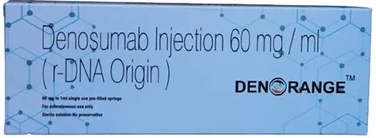
Denosumab Injection — RANKL Inhibitor for Osteoporosis and Cancer Treatment-Induced Bone Loss
Supplied only against a valid prescription from a registered medical practitioner.
Sourced from authorised channels
Temperature-controlled packing
Hospitals, clinics, pharmacies
Delhi drug licence holder
Denorange® (Denosumab) — Cost-Effective RANKL Inhibitor for Bone Health
A Sourcing Guide for Hospitals and Endocrinology Clinics
Denorange® (Denosumab) is a fully human monoclonal antibody indicated, according to its approved prescribing information, for the treatment of osteoporosis in postmenopausal women and men at increased risk of fracture, and for bone loss associated with hormone ablation therapy in prostate and breast cancer patients. As with all antiresorptive biologic therapies, the decision to prescribe Denorange, including treatment duration and monitoring, rests entirely with the treating physician, in accordance with the approved label. This page provides sourcing and procurement information for hospitals and pharmacies, not clinical or treatment guidance.
As both a trusted medicine distributor in Delhi and a licensed pharmaceutical distributor in Delhi, A.K. Pharma supplies genuine Denorange (Denosumab) to hospitals, endocrinology clinics, oncology centres, and pharmacies across India. Hospitals managing broader bone health caseloads can also source companion medicines through A.K. Pharma’s full product range.
Denorange contains Denosumab, a fully human IgG2 monoclonal antibody that targets RANKL (Receptor Activator of Nuclear factor Kappa-B Ligand), a protein essential for the formation, function, and survival of osteoclasts — the cells responsible for bone resorption.
RANKL’s Role in Bone Remodelling:
According to published endocrinology literature, bone is in a constant state of remodelling, balanced between osteoclast-mediated bone resorption and osteoblast-mediated bone formation. RANKL, produced by osteoblasts and bone marrow stromal cells, binds to RANK receptors on osteoclast precursors, triggering their differentiation, activation, and survival. In osteoporosis and cancer treatment-induced bone loss, RANKL-driven osteoclast activity outpaces bone formation, leading to progressive loss of bone density and increased fracture risk.
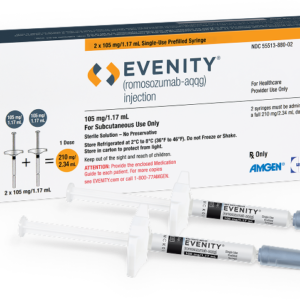
Denosumab’s Mechanism: By binding to and neutralising RANKL, Denorange prevents it from activating RANK receptors on osteoclasts, according to the manufacturer’s prescribing information. This blocks osteoclast formation and activity, reducing bone resorption and helping maintain bone density — a mechanism distinct from anabolic bone-forming therapies such as Evenity (Romosozumab) and Forteo (Teriparatide), which actively stimulate new bone formation rather than only suppressing resorption, and from bisphosphonate-class oral therapies that work through a different antiresorptive mechanism.
Full prescribing information is available at the FDA label for Denosumab, with additional background on osteoporosis management available via the International Osteoporosis Foundation and the National Institute of Arthritis and Musculoskeletal and Skin Diseases.
FREEDOM Trial (Denosumab in Postmenopausal Osteoporosis)
Published in the New England Journal of Medicine (2009), the pivotal FREEDOM trial randomised 7,868 postmenopausal women with osteoporosis to Denosumab 60mg every 6 months or placebo over 36 months. Key results demonstrated:
FREEDOM Extension Study (10-Year Long-Term Data)
Published in Lancet Diabetes & Endocrinology (2017), the FREEDOM extension followed patients for up to 10 years of continuous Denosumab therapy, demonstrating sustained low fracture incidence and continued bone mineral density gains with a favourable long-term safety profile, one of the longest bone health biologic datasets available.
HALT Trial (Denosumab for Treatment-Induced Bone Loss in Prostate Cancer)
Published in the New England Journal of Medicine (2009), this trial demonstrated that Denosumab 60mg every 6 months significantly increased bone mineral density and reduced new vertebral fracture incidence in men receiving androgen deprivation therapy for non-metastatic prostate cancer — a population at substantially elevated fracture risk due to treatment-induced testosterone suppression.
ABCSG-18 Trial (Denosumab in Aromatase Inhibitor-Associated Bone Loss)
Published in the Lancet (2015), this trial demonstrated that Denosumab significantly reduced clinical fracture risk in postmenopausal women with early breast cancer receiving aromatase inhibitor therapy — establishing Denosumab as a standard supportive care option alongside hormone therapy in this setting.
For broader clinical guidance on osteoporosis and bone health management, the American Society for Bone and Mineral Research (ASBMR) and the National Osteoporosis Foundation publish ongoing clinical guidance.
Denorange is supplied as:
| Presentation | Strength | Administration |
|---|---|---|
| Denorange Injection | 60mg/mL, single-dose pre-filled syringe | Subcutaneous injection, once every 6 months |
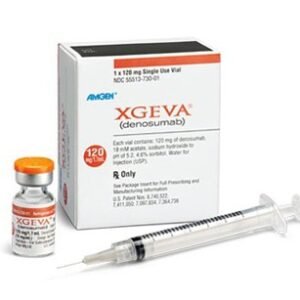
This 60mg strength and 6-monthly dosing schedule is specific to osteoporosis and treatment-induced bone loss indications. It differs from the higher-dose Denosumab formulation (Xgeva 120mg), which is used every 4 weeks specifically in oncology settings for bone metastases and giant cell tumour of bone. The two products and their respective strengths are not interchangeable and should never be substituted for each other without specific direction from the treating physician.
Postmenopausal Osteoporosis:
Bone Loss Due to Hormone Ablation Therapy:
Increasing Bone Mass in Men With Osteoporosis:
For detailed indication information refer to MedlinePlus Denosumab and the Arthritis Foundation bone health resource.
Significant Fracture Risk Reduction
The FREEDOM trial demonstrates a 68% reduction in vertebral fracture risk and 40% reduction in hip fracture risk compared to placebo — among the most substantial fracture risk reductions demonstrated for any osteoporosis therapy.
Convenient Twice-Yearly Dosing
A single subcutaneous injection of Denosumab 60mg every 6 months supports better long-term treatment adherence compared to daily or weekly oral therapies, particularly relevant for elderly patients managing multiple medications.
Cost-Effective Access to an Established Mechanism
As a domestically manufactured Denosumab option, Denorange provides hospitals and patients access to the same evidence-based mechanism documented in FREEDOM and related trials, at more accessible pricing than the originator biologic Prolia.
Effective Where Oral Therapy Has Failed
Denorange provides a treatment option for patients who cannot tolerate oral bisphosphonates or have had an inadequate response to oral antiresorptive therapy.
Sustained Long-Term Efficacy Data
Up to 10 years of continuous therapy data from the FREEDOM extension study provides reassurance on long-term safety and continued efficacy, one of the strongest long-term datasets available for any bone health biologic.
Dosing of Denorange is determined by the prescribing physician according to the approved label. General administration information from the manufacturer’s prescribing information includes:
Monitoring (per manufacturer prescribing information):
| Parameter | Frequency |
|---|---|
| Serum calcium | Before each dose, particularly in patients with renal impairment |
| Vitamin D levels | Baseline and periodically |
| Dental assessment | Before starting, in patients with risk factors for osteonecrosis of the jaw |
| Bone mineral density (DEXA scan) | Periodically per treating physician’s protocol |
Full dosing guidelines are available at Drugs.com Denosumab Dosage and in the manufacturer’s official prescribing information, and should always be followed exactly as directed by the treating physician.
Denorange is prescribed by endocrinologists, orthopaedic specialists, oncologists, and general physicians managing bone health for:
Denorange is prescribed by specialists and general physicians managing bone health and oncology-related bone loss. A.K. Pharma supplies Denorange to hospitals, endocrinology clinics, and pharmacies across Delhi and India.
Common side effects include back pain, pain in extremities, musculoskeletal pain, hypercholesterolaemia, cystitis, and upper respiratory tract infections.
Serious side effects include:
Hypocalcaemia: Denosumab can cause clinically significant decreases in serum calcium, particularly in patients with renal impairment. Pre-existing hypocalcaemia must be corrected before starting therapy. Calcium and vitamin D supplementation is recommended throughout treatment, per the approved prescribing information.
Osteonecrosis of the Jaw (ONJ): A rare but serious adverse event associated with antiresorptive therapy. Risk factors include invasive dental procedures, poor oral hygiene, and concurrent corticosteroid use. A dental examination prior to starting therapy is recommended for patients with risk factors.
Atypical Femoral Fractures: Rare fractures of the femoral shaft have been reported with long-term antiresorptive therapy. Patients should be counselled to report new or unusual thigh, hip, or groin pain.
Serious Infections: Denosumab may increase susceptibility to certain infections, including skin infections (cellulitis) and endocarditis, given RANKL’s role in immune cell function beyond bone metabolism.
Multiple Vertebral Fractures Following Discontinuation: Discontinuing Denosumab without transitioning to another antiresorptive agent has been associated with rebound bone turnover and increased risk of multiple vertebral fractures. Any decision to stop treatment should always include a planned transition therapy.
Full side effect information is available at FDA Denosumab Safety Information.
As a responsible medicine distributor in Delhi, A.K. Pharma stores all biologic medicines including Denorange under manufacturer-recommended cold chain conditions ensuring product integrity for every supply.
Denorange (Denosumab) contains the same active ingredient as the originator Prolia, developed by Amgen Inc. Denosumab received FDA approval in June 2010 for postmenopausal osteoporosis, with subsequent approvals for bone loss associated with hormone ablation therapy and male osteoporosis. Denorange is manufactured domestically in India, providing hospitals and patients with a cost-effective alternative to the originator biologic at the same approved strength and dosing schedule. A.K. Pharma supplies only genuine Denorange sourced from authorised distributors.
Q. What is Denorange used for?
Denorange (Denosumab) is used to treat osteoporosis in postmenopausal women and men at increased fracture risk, and to manage bone loss caused by hormone-suppressing cancer treatments such as androgen deprivation therapy and aromatase inhibitor therapy.
Q. What is the generic name and strength of Denorange?
The generic name of Denorange is Denosumab, supplied as a 60mg/mL single-dose pre-filled syringe, administered once every 6 months. It contains the same active ingredient as the originator Prolia, manufactured domestically in India.
Q. How is Denorange different from Prolia?
Both Denorange and Prolia contain Denosumab at the same 60mg strength and 6-monthly dosing schedule. Denorange is manufactured domestically in India, offering more accessible pricing, while Prolia is the originator biologic manufactured by Amgen.
Q. How is Denorange different from Xgeva?
Although both contain Denosumab, Denorange at 60mg every 6 months is indicated for osteoporosis and treatment-induced bone loss, while Xgeva at 120mg every 4 weeks is a higher-dose formulation specifically for oncology indications including bone metastases. They are not interchangeable.
Q. How often is Denorange administered?
Denorange is given as a single subcutaneous injection of 60mg once every 6 months, making it significantly less frequent than daily or weekly oral osteoporosis medicines.
Q. Why is calcium supplementation important with Denorange?
Denosumab’s mechanism can lower blood calcium levels, particularly in patients with reduced kidney function. Calcium and vitamin D supplementation helps maintain normal calcium levels throughout treatment, per the approved prescribing information.
Q. What happens if Denorange treatment is stopped?
Stopping Denosumab without transitioning to another bone-protective medicine has been associated with rapid bone turnover and increased risk of multiple vertebral fractures. Any plan to discontinue treatment should be discussed with the prescribing physician, who will plan an appropriate transition therapy.
Q. Is Denorange available in India?
Yes. Denorange can be supplied to hospitals, endocrinology clinics, and pharmacies across India through licensed pharmaceutical distributors. Contact A.K. Pharma — medicine distributor in Delhi and pharmaceutical distributor in Delhi — for availability and pricing.
Q. What is the price of Denorange in India?
Denorange price in India varies by pack size and order quantity. Contact A.K. Pharma at 011 4172 6999 or WhatsApp +91 9810034827 for current pricing and bulk supply rates.
Q. How to order Denorange from A.K. Pharma?
You can request a quote directly from this page, call us at 011 4172 6999, or WhatsApp us at +91 9810034827 with your requirements and we will respond promptly.
Q. Does A.K. Pharma supply Denorange in bulk?
Yes. A.K. Pharma supplies Denorange in bulk to hospitals, endocrinology clinics, and pharmacies across Delhi and India.
📍 E-2/257A, 2nd Floor, Shastri Nagar, New Delhi 110052
📞 011 4172 6999
📱 WhatsApp: +91 9810034827
🌐 akpharma.in
Disclaimer: This page is intended for informational and sourcing/procurement purposes only and does not constitute medical or clinical advice. All treatment decisions, including drug selection and dosing, should be made by a qualified healthcare professional in accordance with the approved prescribing information. A.K. Pharma is a licensed medicine distributor and does not provide clinical guidance.