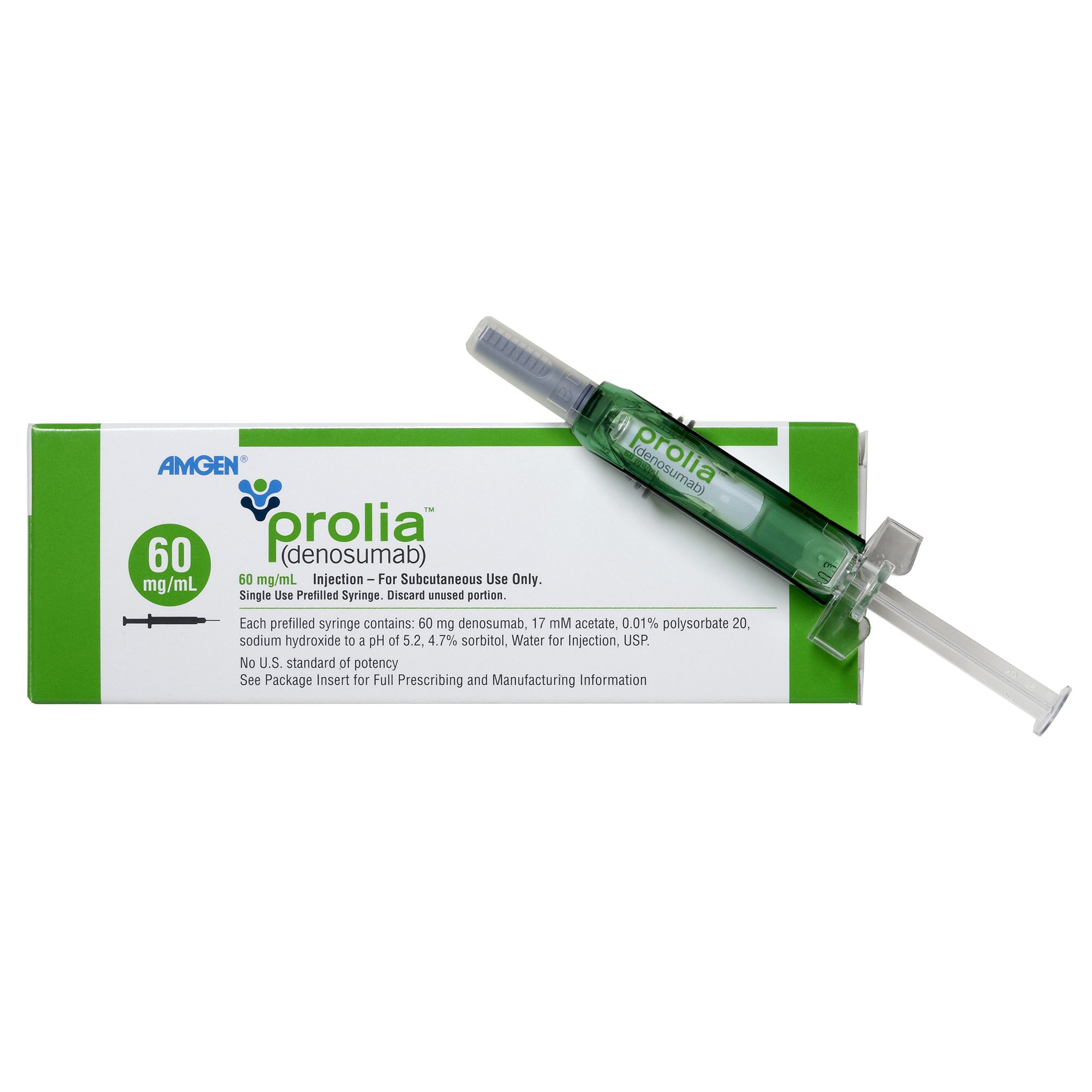
Denosumab 60mg Injection — RANK Ligand Inhibitor for Osteoporosis Treatment
Supplied only against a valid prescription from a registered medical practitioner.
Sourced from authorised channels
Temperature-controlled packing
Hospitals, clinics, pharmacies
Delhi drug licence holder
Prolia® (Denosumab 60mg) — RANK Ligand Inhibitor for Postmenopausal Osteoporosis
Gold Standard Antiresorptive Therapy for Osteoporosis and Bone Loss Prevention
Prolia® (Denosumab 60mg) is a fully human monoclonal antibody that inhibits RANK ligand (RANKL), a protein essential for the formation, function, and survival of osteoclasts — the cells responsible for bone breakdown. By blocking RANKL, Prolia reduces bone resorption, increases bone mineral density, and significantly reduces fracture risk in patients with osteoporosis.
A.K. Pharma is a trusted medicine distributor in Delhi supplying genuine Prolia (Denosumab 60mg) to hospitals, orthopaedic centres, endocrinology clinics, and pharmacies across India. Manufactured by Amgen in partnership with UCB Pharma, Prolia is one of the most widely prescribed injectable treatments for osteoporosis globally.
What is Prolia (Denosumab 60mg)?
Prolia contains Denosumab, a fully human IgG2 monoclonal antibody with high affinity and specificity for human RANKL. RANKL (Receptor Activator of Nuclear Factor Kappa-B Ligand) is expressed by osteoblasts and stromal cells and is essential for osteoclast differentiation and activation.
By binding to and neutralising RANKL, Prolia:
Unlike bisphosphonates which incorporate into bone matrix, Denosumab’s effects are fully reversible upon discontinuation. This makes careful transition planning essential when stopping Prolia treatment.
Full prescribing information is available at the FDA label for Denosumab.
Clinical Studies and Evidence
FREEDOM Trial (Pivotal Prolia Fracture Trial) Published in the New England Journal of Medicine (2009), the FREEDOM trial demonstrated that Prolia significantly reduced vertebral fractures by 68%, hip fractures by 40%, and non-vertebral fractures by 20% compared to placebo over 36 months in postmenopausal women with osteoporosis.
FREEDOM Extension Study (Long-Term Safety and Efficacy) Published in Osteoporosis International (2015), the FREEDOM extension demonstrated that Prolia treatment for up to 10 years continued to increase BMD, reduce fracture rates, and maintain a favourable safety profile — supporting long-term use.
ADAMO Trial (Prolia in Men with Osteoporosis) Published in the Journal of Clinical Endocrinology and Metabolism (2012), the ADAMO trial showed Prolia significantly increased lumbar spine and total hip BMD in men with osteoporosis over 12 months.
HALT Trial (Prolia in Prostate Cancer) Published in the New England Journal of Medicine (2009), the HALT trial demonstrated Prolia significantly increased BMD and reduced vertebral fractures in men with prostate cancer receiving androgen deprivation therapy.
Prolia vs Alendronate (Head-to-Head) Published in Current Medical Research and Opinion (2011), head-to-head data showed Prolia produced significantly greater increases in BMD compared to Alendronate at the lumbar spine, total hip, and femoral neck.
Available Strengths
Prolia is available as:
The recommended dose is 60mg subcutaneously every 6 months — just two injections per year. Patients should also take adequate calcium and vitamin D supplementation during treatment.
Indications — What Prolia is Used For
Osteoporosis in Postmenopausal Women
Osteoporosis in Men
Bone Loss in Cancer Patients
For detailed indication information refer to MedlinePlus Denosumab Injection.
Note: Prolia (60mg) is different from Xgeva (Denosumab 120mg) which is used for prevention of skeletal related events in bone metastases. Do not substitute one for the other.
Key Benefits of Prolia
Convenient Dosing — Only Twice a Year Prolia’s every-6-month dosing schedule is the most convenient of any injectable osteoporosis treatment, significantly improving patient adherence compared to monthly or weekly regimens.
Proven Fracture Reduction Across All Major Sites Prolia reduces vertebral fractures by 68%, hip fractures by 40%, and non-vertebral fractures by 20% — providing comprehensive skeletal protection across all fracture sites.
Superior BMD Gains vs Bisphosphonates Head-to-head data demonstrates Prolia produces greater increases in bone mineral density compared to oral bisphosphonates, particularly at the hip and femoral neck.
Effective Regardless of Renal Function Unlike bisphosphonates which require dose adjustment or are contraindicated in renal impairment, Prolia can be used in patients with reduced kidney function including those on dialysis (with monitoring).
Long-Term Proven Safety The FREEDOM extension study demonstrates consistent efficacy and favourable safety over 10 years of continuous treatment.
Ideal Sequential Therapy After Anabolic Treatment Prolia is the preferred antiresorptive agent to consolidate bone density gains after completing anabolic therapy with Forteo or Terifrac.
How Prolia Works
Bone remodelling is a continuous process involving two types of cells:
In osteoporosis the balance shifts towards excessive bone resorption. Osteoclast formation and activity is regulated by the RANK/RANKL/OPG pathway:
Prolia mimics OPG by binding to and neutralising RANKL, preventing it from activating RANK receptors. This reduces osteoclast numbers and activity, shifting the bone remodelling balance back towards bone formation.
For a detailed mechanism overview refer to the International Osteoporosis Foundation and the American Society for Bone and Mineral Research.
Prolia vs Forteo — When to Use Each
| Feature | Prolia (Denosumab 60mg) | Forteo/Terifrac (Teriparatide) |
|---|---|---|
| Mechanism | Antiresorptive | Anabolic |
| Dosing | Every 6 months | Daily injection |
| Duration | Ongoing (until risk reduces) | Maximum 24 months |
| Best For | Most osteoporosis patients | Severe osteoporosis, treatment failure |
| Renal Impairment | Can be used | Use with caution |
| After Stopping | Must transition carefully (rebound risk) | Transition to antiresorptive |
| Available at A.K. Pharma | Request Quote | Request Quote |
Important — Discontinuation Rebound Risk
A critical consideration with Prolia is the risk of rebound vertebral fractures after discontinuation. When Prolia is stopped, bone turnover increases rapidly above pre-treatment levels, significantly increasing fracture risk. To manage this risk:
This important safety consideration is detailed in the ASBMR Task Force Report on Denosumab Discontinuation.
Dosage and Administration
Full dosing guidelines available at Drugs.com Denosumab Dosage.
Who Should Use Prolia
Prolia is prescribed for:
Prolia is prescribed by endocrinologists, orthopaedic surgeons, rheumatologists, oncologists, and general physicians. A.K. Pharma supplies Prolia to hospitals, orthopaedic centres, and pharmacies across Delhi and India.
Possible Side Effects
Common side effects include back pain, pain in extremities, musculoskeletal pain, hypercholesterolaemia, and urinary tract infection.
Serious side effects include:
Full side effect information available at FDA Prolia Safety Information.
Precautions
Storage and Handling
As a responsible medicine distributor in Delhi, A.K. Pharma maintains full cold chain requirements during storage and supply of Prolia ensuring product integrity for every unit supplied to hospitals and pharmacies across India.
Manufacturer Information
Prolia (Denosumab 60mg) is manufactured by Amgen Inc., a global biotechnology company specialising in bone health, oncology, and cardiovascular medicines. Prolia received FDA approval in June 2010 for postmenopausal osteoporosis. A.K. Pharma supplies only genuine Prolia sourced from authorized distributors.
Related Bone and Oncology Medicines Available at A.K. Pharma
Frequently Asked Questions
Q. What is Prolia used for? Prolia (Denosumab 60mg) is used to treat osteoporosis in postmenopausal women and men at high fracture risk, and to treat bone loss in cancer patients on hormone deprivation therapy. More information available at MedlinePlus.
Q. What is the generic name of Prolia? The generic name of Prolia is Denosumab. It is a fully human monoclonal antibody that inhibits RANKL to reduce bone resorption.
Q. How often is Prolia given? Prolia is given as a subcutaneous injection every 6 months — just twice a year. Patients should also take calcium and vitamin D supplementation during treatment.
Q. What is the difference between Prolia and Xgeva? Both contain Denosumab but at different doses for different indications. Prolia (60mg every 6 months) is for osteoporosis. Xgeva (120mg every 4 weeks) is for prevention of skeletal related events in bone metastases. Do not substitute one for the other.
Q. Can Prolia be stopped abruptly? No. Prolia should not be stopped abruptly due to the risk of rebound vertebral fractures. Patients must be transitioned to bisphosphonate therapy before discontinuing Prolia. Discuss any planned discontinuation with a bone specialist.
Q. Is Prolia available in India? Prolia can be supplied to hospitals, orthopaedic centres, and pharmacies across India through licensed pharmaceutical distributors. Contact A.K. Pharma — medicine distributor in Delhi — for availability and pricing.
Q. What is the price of Prolia in India? Prolia price in India varies by pack size. Contact A.K. Pharma at 011 4172 6999 or WhatsApp +91 9810034827 for current pricing and bulk supply rates.
Q. How to order Prolia from A.K. Pharma? You can request a quote directly from this page, call us at 011 4172 6999, or WhatsApp us at +91 9810034827 with your requirements and we will respond promptly.
Q. Does A.K. Pharma supply Prolia in bulk? Yes. A.K. Pharma supplies Prolia in bulk to hospitals, orthopaedic centres, endocrinology clinics, and pharmacies across Delhi and India. Contact us for bulk pricing and availability.
Why Order Prolia from A.K. Pharma?
Contact A.K. Pharma for Prolia Supply 📍 E-2/257A, 2nd Floor, Shastri Nagar, New Delhi 110052 📞 011 4172 6999 📱 WhatsApp: +91 9810034827 🌐 akpharma.in